
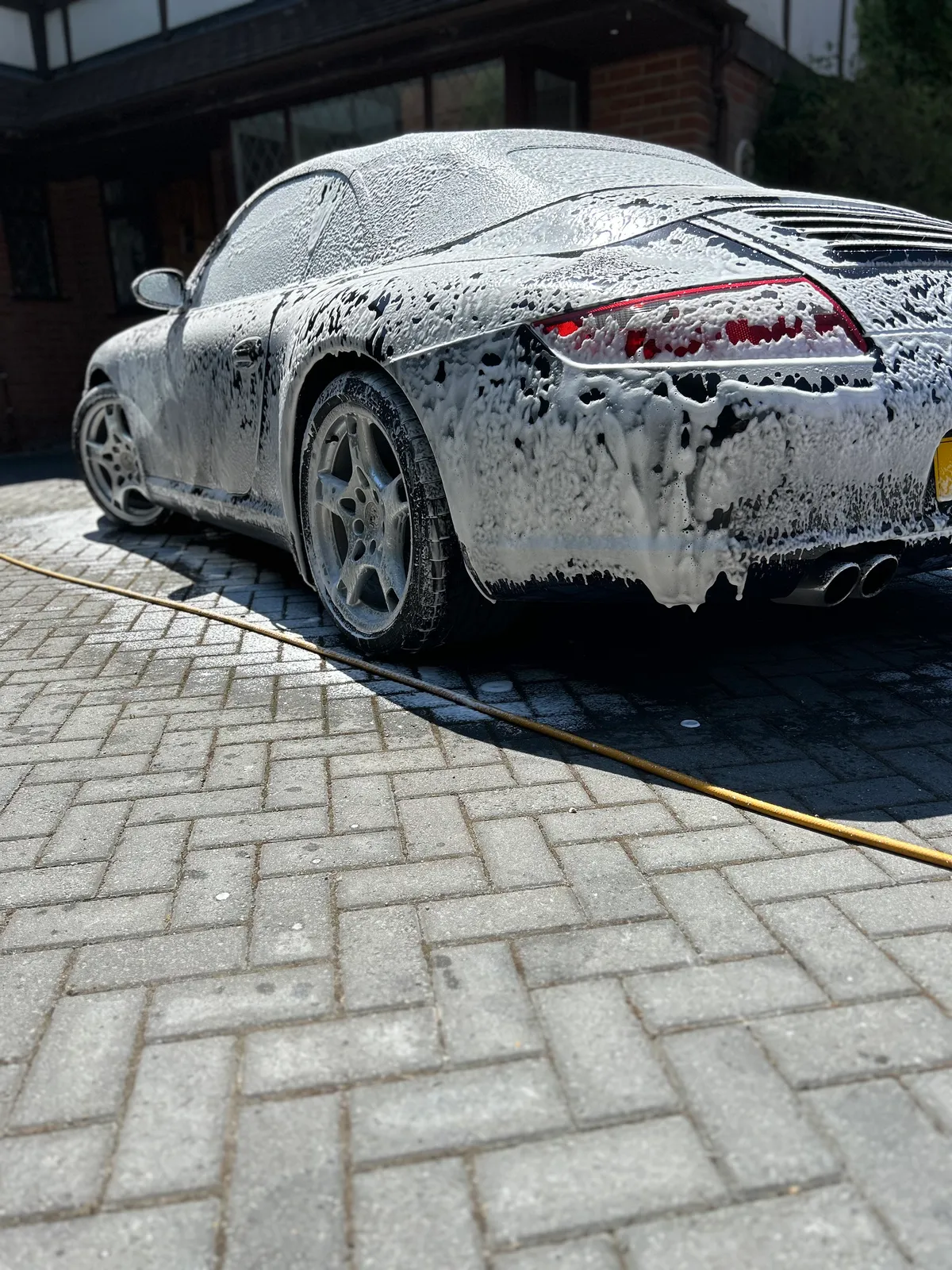
Can a UK summer damage your car? Heat, hot spots and colour
How hot a parked car really gets in a UK summer, where heat and sun do the damage, whether colour matters, and how to protect it.
Can a UK summer damage your car? Heat, hot spots and colour
The short answer is yes, but slowly. One hot afternoon won’t ruin a car. Summer after summer of sun and heat is what fades a dashboard, dulls the paint and bakes marks into the bodywork. Here’s how hot it gets, where the damage happens, whether your car’s colour matters, and what to do about it.
How hot does a parked car get?
Hotter than most people think, even on a mild day. The RSPCA warns that when it’s 22°C outside, a parked car can reach 47°C inside within an hour.
In direct sun, the surfaces get hotter than the air. In a test by ADAC, the German motoring club, an unprotected car’s cabin reached 50°C in 30 minutes and 60°C after 90. The dashboard, steering wheel and gear knob climbed past 70°C. And UK summers are getting hotter: the record of 40.3°C was set in July 2022.
Where the damage happens
The dashboard and trim. The dashboard sits right under the windscreen and gets the hottest. Over time, heat and sun fade it and dry it out.
The roof, bonnet and boot. Flat panels take the most sun. After years of UV, the clear lacquer on top of the paint can break down and start to peel.
Bird droppings, tree sap and bugs. On a hot panel these bake on fast. Autoglym’s research found the mark isn’t mainly the dropping eating the paint: in the heat, the lacquer softens and expands while the dropping dries hard on top, and that leaves the etch. Get them off quickly, and never scrub them off dry.
Does the colour of your car matter?
Yes. Dark paint absorbs far more sunlight than light paint. When ADAC parked identical black and white cars in the sun, the black car’s body panels reached 65°C against the white car’s 44°C, and its cabin was 5°C hotter. Berkeley Lab in the US found white, silver and other light colours reflect around 60% of sunlight, and measured a silver car’s roof up to 25°C cooler than a black one.
A black car isn’t doomed. It just has less margin, so the habits below matter more.
How to protect it
Park in the shade or a garage when you can, especially for long stays.
Use a windscreen sunshade. It won’t cool the air much, but it keeps the sun off the dashboard and steering wheel.
Get droppings and sap off fast. The longer they bake, the more likely they leave a mark.
Don’t wash a hot car in full sun. Water and products dry on the panels before they can be rinsed away. Early morning or evening is better.
Keep a protective layer on the paint, so contamination lands on that rather than straight on the lacquer.
How Zuno helps
Outer and Whole cleans finish with a protective coating that makes water bead and run off.
Regular cleans take droppings, sap and bugs off before they’ve had a chance to bake in.
An operative comes to your address anywhere across Berkshire, so the car never has to sit in a queue in the sun.
Inner and Whole cleans leave two sealed bottles of Fiji water in the cupholders, which you’ll appreciate on a hot day.
And one thing that matter
s more than any of this: never leave children or pets in a parked car on a warm day, even for a few minutes.
Book a clean below and get your car summer-ready.
Keep reading
Washing a car in the sun: what heat does to paint and glass
What happens when you wash paint and glass that’s been baking in the sun, from water spots to cracked windscreens, and how to work around it.

Selling your car? The best preparation starts years before the advert
Most buyers won’t pay full price for a scruffy car. Here’s why regular care beats a last-minute clean, and how Zuno keeps your car ready to sell.
How to look after your car in a UK winter
Road salt, flat batteries, ice and damp carpets: the winter checks that keep a car healthy, and the rules that catch drivers out.